Say "cheap flooring" out loud and most people picture the same thing: thin, hollow-sounding plank that gaps in a year and looks like plastic from the start. Maybe they've been burned before or they know someone who has.
Is low-priced flooring worth buying, or are you just paying twice?
The answer depends entirely on why the floor is cheap. There’s two completely different reasons, and they lead to opposite outcomes.
Why "Cheap" Doesn't Always Mean Low Quality
A floor can carry a low price for two reasons.
The first is bad product. The maker used a paper-thin wear layer, a weak core, and a printed surface that looks fake. It's cheap because it's worth less. That floor will gap, curl, and wear through, and you will replace it fast.
This is the kind of floor that earned "cheap flooring" its bad name.
The second reason has nothing to do with quality. The product is first-quality, made to the same spec as the stuff selling at full price somewhere else. It's priced low because of how it got to the warehouse, not because of what it is.
Here's how that happens:
A manufacturer discontinued the color or style. The remaining stock has to move, so it sells at a discount. The plank is identical to what was full price last month or months ago.
A mill overproduced a run. They made more than the orders called for, and the extra has to clear the floor. It has nowhere to go, so it just sits in storage.
A distributor is clearing warehouse space. Overstock ties up money and room, so they sell it off at a loss to free both up.
A direct buy. Skip the middle layers between the mill and you, and the markup those layers add disappears from the price.
We buy closeouts, overstock, and direct runs. That's the mechanical reason the price is low. The floor isn't worse. The path it took to get to you was just cheaper. The reason it’s possible is the years of experience in flooring and the relationships formed with manufacturers.
How to Tell the Difference Before You Buy
You don't have to guess which kind of cheap you're looking at. The spec sheet tells you. Check three numbers:
Wear layer (LVP and laminate). This is the clear protective top layer that takes the wear. 6 mil is entry-level and fine for a closet. 12 mil handles a normal household. 20 mil is built for commercial traffic.
Core type and thickness. A rigid core like SPC resists dents and stays flat. A thicker core feels solid underfoot instead of hollow. Thin, flexible plank telegraphs every bump in the subfloor.
AC rating (laminate). This rates abrasion resistance. AC3 is heavy residential, AC4 and up handle commercial use. Below AC3, you're buying a floor for light-duty rooms only.
A floor priced low because it's overstock has nothing to hide.
When Cheap Flooring Is Worth It
For a lot of projects, paying full retail is just lost money:
- Tenants are hard on floors and you replace them on a cycle. First-quality LVP at a closeout price is the smart spend, not the splurge.
- Cost per square foot comes straight off your margin. A floor that looks great and holds through the sale, bought at overstock pricing, is exactly the move.
- Basements, laundry rooms, and high-traffic spaces. These take abuse and don't need to be showpieces. Durable and affordable beats fancy and expensive.
- Any room where the budget is real. Most are. A good floor you can afford beats a perfect floor you can't.
In all of these, a discounted, quality floor is the right answer.
When to Spend More
It makes sense to spend more if you want a very particular floor and style and have the budget for it.
If you want a specific in-production color matched exactly across a big open floor plan, closeout stock might not have the quantity in one dye lot.
If you're set on solid hardwood, so you can refinish three times over decades in your forever home, that's a different purchase with different math.
We also sell “cheap” solid hardwood. This is first-quality product perfect for a forever home, priced better than you will find anywhere else.
What’s the Catch?
Buying flooring at a discount comes with one honest trade-off: all sales are final, and we don't accept returns. Closeout and overstock inventory moves once and doesn't come back, so there's no restocking it.
There’s also no warranty. That’s why it’s crucial when buying flooring at discount to know exactly what you’re getting and what you can expect from the floor. Not to mention how to take proper care of it.
That may sound like a downside, but it's the trade-off for receiving a good floor at a cheap price.
You can order a sample to be sure you’re making the right purchase beyond our promise that this is a floor worth installing. We stand by these floors, but you are the one who will live on them!
Order a Sample
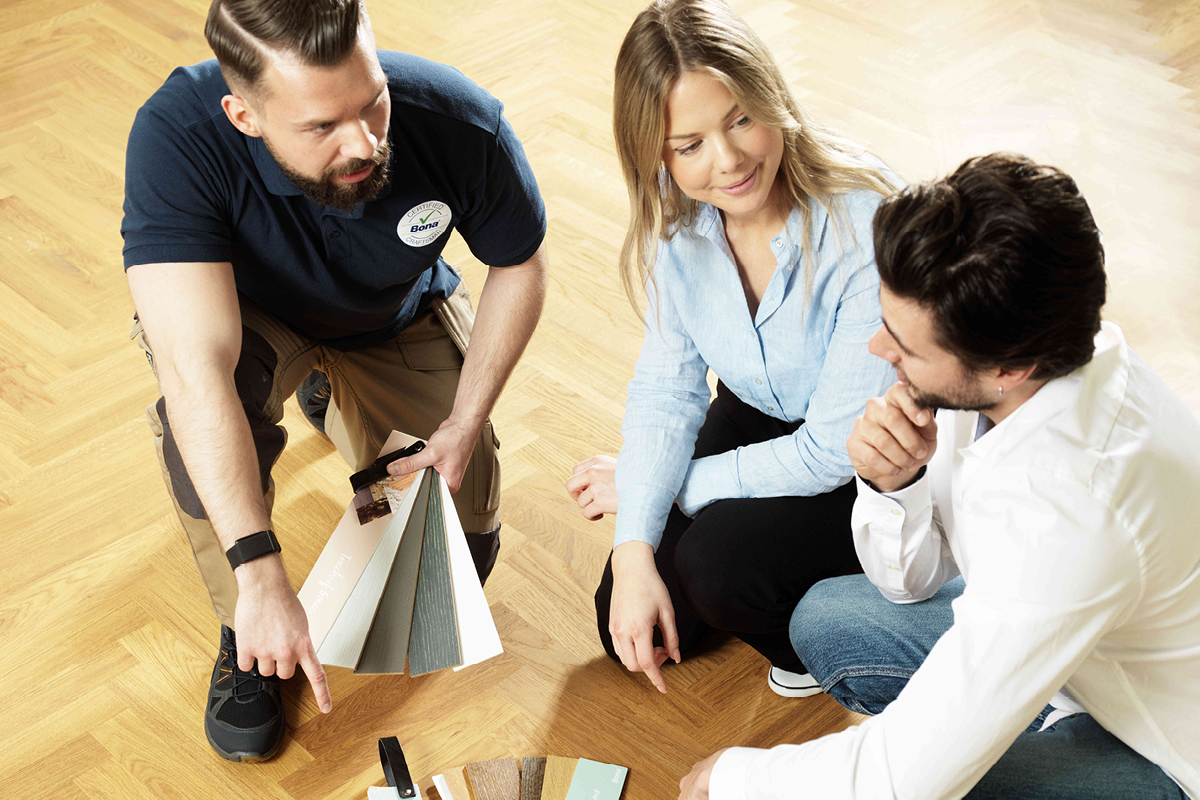
Order samples. They're not expensive and arrive conveniently. Set them on your actual floor in your actual light and confirm the color and feel before you commit. The sample is how you make a final-sale floor a safe buy. You see exactly what you're getting, then you order it.
Call or email us for sample.
Is It Worth It?
If the floor is cheap because it's a bad product, no. It never is.
If the floor is cheap because it's quality stock that got discontinued, overproduced, or bought direct, then yes, and it's one of the better deals out there. Same floor, lower path, lower price.
Check the wear layer. Check the core. Order the sample. Then buy with confidence.
Cheap Flooring USA stocks quality closeout and overstock LVP, laminate, and hardwood. Our owner has 40 years in flooring with many success stories, so what reaches the warehouse is a product that earns its place there.
And if an order shows up damaged, we handle it on our side.
Browse quality hardwood, vinyl, and laminate flooring at closeout prices — samples available on every product.